
As the global economic scenario is improving, Ajay Chhibber, regional director (Asia and the Pacific) for the United Nations Development Programme, believes employment will be the major indicator to gauge the firmness of the economic recovery.

Gap is hoping to find enough cows for its cotton farmers. The focus on natural farming, it says, will provide relief to cotton farmers as the high cost of fertilisers is one of the reasons for their being in debt.

According to the SEZ Act, 2005, there is no upper limit for land acquisition by state governments. It also allows acquisition of wasteland and single-crop land, putting negative impact on common property resources like land, forest and water bodies.

The economy has developed a resilience beyond expectations.

Magsaysay awardee Aruna Roy tells Sreelatha Menon that she is ready to chase a new dream, a School for Democracy.
The Employees Provident Fund Organisation will be seeking approval from its apex decision-making body, the Central Board of Trustees, to implement a finance ministry order to invest up to 15 percent of the fund in equity. The new pattern that was notified last year comes into force from April 2010.

Aviva tries a new tool with Sachin Tendulkar to grab a bigger share of the life insurance market.
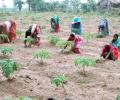
The first meeting of the newly-reconstituted Central Employment Guarantee Council last week, meant to oversee the National Rural Employment Guarantee Programme, saw two prominent members, Jean Dreze and Aruna Roy, object to various new ideas of the government, beginning with the one of using it to build Bharat Nirman Rajiv Gandhi Seva Kendras, meant to serve as offices for panchayats.
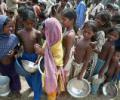
Social audit of rural jobs scheme promises to empower people with information about how they are being denied the benefits of the schemes meant for them.

The problem with India's growth story has been its inability to reduce poverty to significant levels.

The issuance of identification numbers, which will be a demand-driven endeavour and will be issued on a voluntary basis, will help in plugging leakages in transfer of benefits under government welfare programmes.

The government was able to initiate crucial steps in the ministries of rural development, human resource development, home, finance and commerce, thanks to energetic ministers, but did not exactly win laurels on other fronts.

The cash-starved Indian textile industry is of the view that the Technology Upgradation Fund Scheme, or Tufs, flagship scheme of the textiles ministry, has lost its shine, as economic slowdown has put modernisation and expansion plans of companies on hold. The industry says there are more basic problems that the government needs to address.

Food security for all was a poll promise from the ruling Congress party before this year's general elections.

Members protest, rural ministry assures it will not be so hereafter.

Mobile phone manufacture in India started only in 2006.
Rule 4 in Section 55 of the Land Acquisition Act's Company Rules may help farmers in Dadri but is hardly a guarantee for other cultivators.
The right to food campaign, which is a collaboration of people's movements from across the country, is now on the verge of seeing its demand of a right to food become a reality.

To be out by October, it reflects weight of components in GDP.
On October 2, the government will roll out the comprehensive plan in 10 districts. The ministry has had a series of discussions with the National Institute of Rural Development, which is to be the nodal body for overseeing the convergence of all rural schemes.
 © 2026 Rediff.com - Investor Information - Advertise with us - Disclaimer - Privacy Policy - Sitemap - Feedback - About us - Terms of use - Grievances